France has long been synonymous with Paris, the City of Light, a beacon for artists, dreamers, and lovers. The French capital’s reputation for romance, history, and elegance has cemented it as one of the most visited cities in the world. But France is a land of contrasts, and while the Parisian boulevards dazzle, the true heart of the nation often beats far from the capital. Beyond the well-trodden tourist avenues lies a quieter, gentler France: the countryside, dotted with medieval villages, sweeping vineyards, alpine retreats, and coastal hamlets that hold stories older than the French Republic itself. To explore these hidden corners is to discover a France unshaped by clichés, a France that moves at a slower rhythm, one that invites you to savor life as the locals do.
The Allure of the French Countryside
The French countryside embodies the art of living well. Here, life is dictated by the seasons, harvests, and festivals that have bound communities together for centuries. Ancient stone houses overlook rolling valleys, timeworn cathedrals rise above cobbled streets, and village squares come alive with weekly markets selling fragrant cheeses, fresh bread, and local wines. These places often seem frozen in time, untouched by the rush of modernity.
Traveling beyond Paris means stepping into a living postcard where the past and present coexist seamlessly. Unlike the urban sprawl of the capital, the countryside invites intimacy: conversations with artisans, dinners in rustic inns, and afternoons wandering narrow lanes that lead to unexpected views. France’s beauty lies not just in its monuments but in its landscapes and the simple rituals of village life.
Provence: Lavender Fields and Sunlit Villages
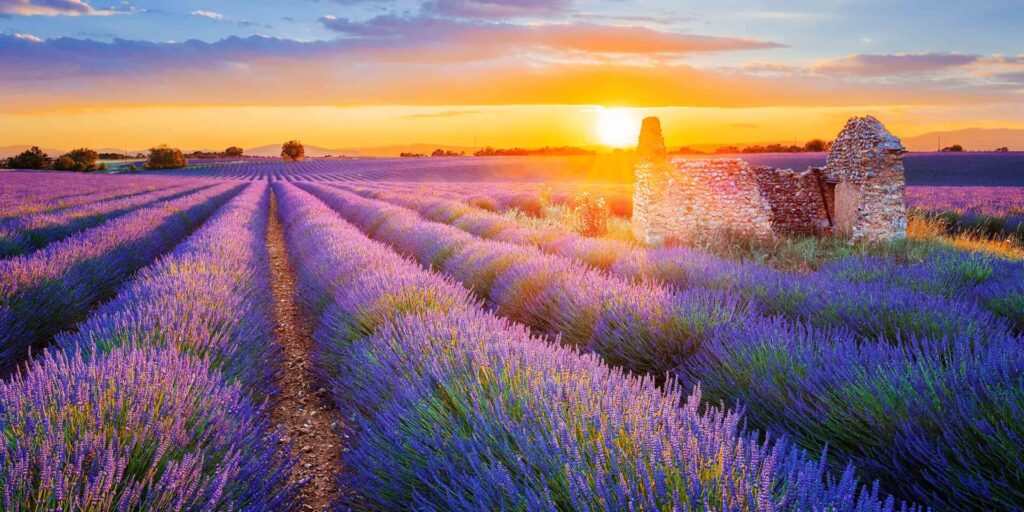
One of France’s most iconic rural regions is Provence, where sunlight seems to have a different quality, bathing everything in a warm golden glow. The region is famous for its lavender fields that bloom in July, creating endless purple horizons under the azure sky. But beyond the postcard imagery, Provence holds villages that preserve centuries-old traditions.
Hilltop towns like Gordes and Roussillon reveal winding alleys, ochre-colored houses, and breathtaking panoramas of the Luberon Valley. In Aix-en-Provence, fountains and markets remind visitors of the region’s artistic past, once immortalized by Cézanne. Villages such as Lourmarin host weekly open-air markets where visitors can taste olive oils, local honey, and Provençal wines that speak of the terroir.
Here, time slows down. Lunch stretches across hours with dishes like ratatouille and bouillabaisse, prepared with recipes handed down through generations. Provence is not just a destination; it is a sensory experience, where the scent of rosemary mingles with the sound of cicadas and the sight of vineyards extending to the horizon.
Alsace: Between France and Germany
Travel northeast, and you find yourself in Alsace, a region where French and German cultures entwine. The villages here, like Riquewihr and Eguisheim, look like something from a fairy tale, with half-timbered houses adorned with flowers in spring and festive lights in winter. Each town tells a story of contested borders and cultural blending, where cuisine reflects both French finesse and German heartiness.
Alsatian villages are best explored on foot, with cobbled streets leading to wine cellars that open their doors for tastings of Riesling and Gewürztraminer. In Colmar, canals weave through brightly painted houses, earning it the nickname “Little Venice.” Autumn transforms Alsace into a painter’s palette of golden vines and crisp air, making it an enchanting countryside escape for those who wish to wander beyond Paris.
Brittany: Wild Coasts and Celtic Echoes
In the far northwest, Brittany offers a dramatically different kind of rural escape. Unlike the sunlit Mediterranean, Brittany is defined by rugged coastlines, windswept cliffs, and a deep connection to its Celtic heritage. The villages here, such as Locronan or Dinan, transport visitors into medieval times with granite houses and Gothic churches that rise above the mist.
Brittany’s countryside is inseparable from its maritime identity. Fishing villages like Cancale are famed for oysters, while coastal paths provide vistas of lighthouses standing guard against the Atlantic’s waves. The Breton language, music, and folklore still resonate in festivals where locals dance traditional jigs in village squares.
The Dordogne: A Journey Through Time
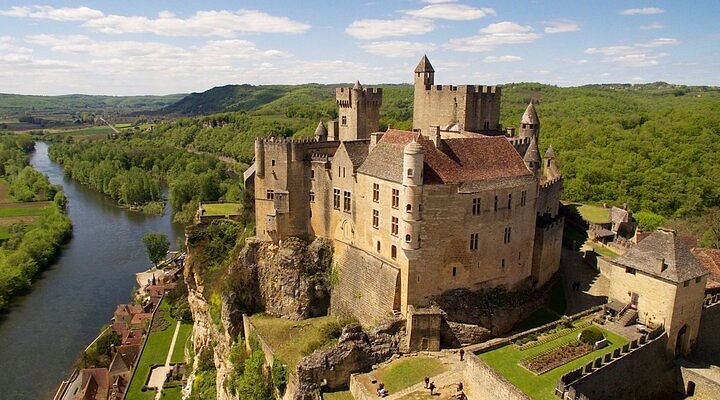
Few regions embody the passage of history as vividly as the Dordogne, in southwestern France. Here, prehistoric caves with ancient drawings exist alongside medieval castles perched above river valleys. Villages like Sarlat-la-Canéda preserve a golden medieval glow, their limestone buildings reflecting centuries of tradition.
Wandering through Dordogne’s villages is like peeling back layers of time. Markets brim with foie gras, truffles, and walnuts, products tied to the land and its people. River cruises along the Dordogne or Vézère reveal views of châteaux, bridges, and farmland untouched by modern development. It is a region that whispers of ancient hunters, feudal lords, and resilient communities that survived wars and revolutions.
Burgundy: Vineyards and Timeless Villages
Burgundy is synonymous with fine wine, but beyond the cellars and tasting rooms lies a landscape shaped by centuries of viticulture. The countryside is marked by small villages that stand between rows of vines, each with its own history and traditions. Villages like Beaune, Chablis, and Vézelay are not merely stops on a wine tour but cultural centers in their own right.
Burgundy’s villages are tied to monastic traditions, with abbeys and churches that once shaped the rhythm of community life. Today, visitors can wander cloisters, taste world-renowned Pinot Noir and Chardonnay, and dine in bistros serving escargots and coq au vin. The Burgundian countryside is a reminder that France’s identity is deeply agricultural, rooted in the soil and the rituals of cultivation.
Hidden Gems of the French Alps
When people think of the Alps, they often imagine ski resorts like Chamonix or Val d’Isère. Yet tucked away in the mountains are smaller, lesser-known villages that reveal a gentler alpine lifestyle. Places like Samoëns or Bonneval-sur-Arc preserve traditional wooden chalets, alpine meadows, and mountain pastures where cows graze, producing the milk for cheeses like Beaufort and Reblochon.
These alpine escapes offer serenity far from Paris’s bustle. Summer brings hiking trails lined with wildflowers, while winter turns the villages into snow-globe scenes. Unlike the grandeur of Paris, the Alps remind visitors of life’s simplicity: warming by a fireplace, sharing fondue with friends, and breathing the crisp mountain air.
Countryside Escapes by the Sea: The French Riviera Beyond the Glamour
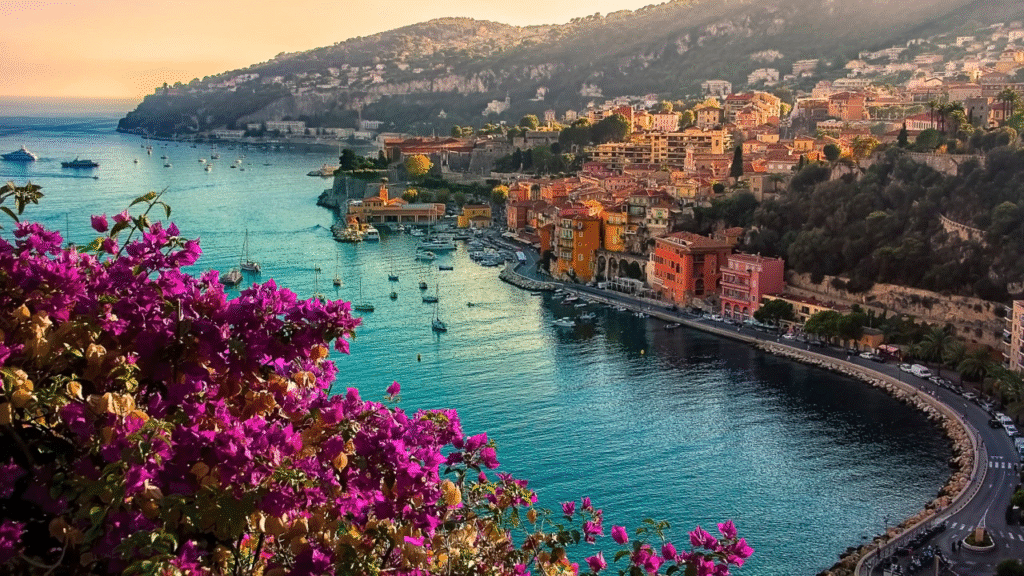
The French Riviera, often associated with luxury and celebrity, also hides quieter villages that provide a very different experience from Cannes or Nice. Inland from the coast, villages like Èze or Saint-Paul-de-Vence cling to hillsides, their stone streets winding toward panoramic sea views. These villages balance the glamour of the Riviera with rustic charm, offering a slower, more authentic Mediterranean escape.
Here, travelers can discover chapels decorated by artists, local markets selling herbs and ceramics, and quiet terraces where villagers sip pastis as the sun sets. Beyond the polished surface of the Riviera lies a countryside that captures the Mediterranean spirit without the flash of cameras.
The Spirit of Village Life
What unites France’s hidden villages is not just their beauty but their sense of community. Unlike Paris, where the pace is fast and anonymity reigns, villages foster belonging. Markets are social gatherings, cafés are extensions of living rooms, and festivals celebrate centuries-old customs. Life in these places is measured not by deadlines but by traditions, meals, and seasons.
For the traveler, this means immersion. Staying in countryside inns or guesthouses often leads to conversations with hosts who share recipes, stories, and recommendations that no guidebook could provide. Wandering through a hidden village reveals layers of identity—regional dialects, local crafts, and cuisines that resist homogenization.
Beyond Tourism: Preserving Rural France
While many seek Paris for its cultural prestige, France’s hidden villages remind us that cultural heritage is not confined to museums or palaces. It thrives in rural landscapes, in vineyards, in fishing harbors, and in family-run bakeries. These places face challenges: depopulation, modernization, and the pull of cities. Yet tourism, when respectful, can help preserve them by sustaining local economies and encouraging the continuation of traditions.
Traveling beyond Paris is not just an escape for the visitor but also a contribution to preserving rural heritage. By choosing a village inn over a city hotel, a traveler supports communities that keep alive crafts, dialects, and cuisines at risk of fading.
Conclusion: The France Beyond the City of Light
Paris will always remain a jewel of France, but to equate the nation with its capital alone is to overlook its soul. The hidden villages and countryside escapes reveal a France that is intimate, diverse, and timeless. Each region tells its own story—Provence with its lavender fields, Alsace with its fairy-tale houses, Brittany with its Celtic cliffs, Dordogne with its medieval echoes, Burgundy with its vineyards, and the Alps with their rustic chalets.
To wander beyond Paris is to encounter a France that is lived, not displayed. It is the France of shared meals, of festivals in small squares, of landscapes that shift with the seasons. It is a France that invites not just admiration but participation, where travelers become part of the rhythm of rural life.