The Call of the Arctic
Few destinations stir the imagination quite like Greenland. This vast island, often called the last frontier of the Arctic, is a place where nature still holds absolute sway. Towering icebergs drift silently through fjords, massive glaciers groan as they move toward the sea, and tundra landscapes stretch endlessly under skies painted with auroras in winter and illuminated by the midnight sun in summer. For travelers, Greenland offers an experience unlike any other—a true encounter with raw, unfiltered wilderness. Unlike destinations built around luxury or convenience, Greenland invites you to embrace remoteness and resilience, to step into a world where human footprints are fleeting and the natural world dominates.

The Geography of Grandeur
At over 2.1 million square kilometers, Greenland is the world’s largest island, yet its population is barely 57,000. Nearly 80 percent of its surface is covered by the Greenland Ice Sheet, a frozen expanse so vast it contains about 10 percent of the world’s freshwater. The habitable strip lies along the coast, where fjords cut deep into the land and small towns and villages cling to rocky outcrops. The contrasts are extreme: lush green valleys can suddenly give way to glaciers, while calm seas are broken by icebergs that dwarf cruise ships. Its sheer scale means that every corner of Greenland offers a different landscape, from the colorful fishing town of Ilulissat to the dramatic fjords of the east coast and the northern expanses where polar bears roam.
Seasons in the Arctic Circle
Greenland’s climate is as much a part of the adventure as its geography. The time of year you visit shapes the experience profoundly. Summer, from June to August, is the season of the midnight sun. During these months, the coastal areas come alive with wildflowers, bird colonies, and whales feeding in the fjords. It is also the best season for hiking, kayaking, and sailing through ice-strewn waters. Autumn brings golden tundra colors and crisp air, with September often considered the best month for those seeking both outdoor exploration and the first glimpses of northern lights. Winter, however, transforms Greenland into another world entirely. From November through March, darkness prevails, broken only by the ethereal glow of auroras.
Arrival and First Impressions
Most journeys to Greenland begin with a flight from Denmark or Iceland, with Kangerlussuaq and Nuuk serving as key entry points. The moment you step off the plane, you realize how different this land is. The air is cold and pure, carrying the faint scent of sea salt and ice. Small airports and towns reveal Greenland’s modest scale of infrastructure, reminding you that this is not a place of bustling metropolises but of intimate communities adapted to harsh conditions. Travelers quickly discover that distances are vast, and no road network connects Greenland’s settlements. Movement between towns is by boat, air, or in winter, across the snow on sleds. This isolation is part of Greenland’s allure—it is not just a destination, but a departure from modern convenience into timelessness.
The Communities of the North
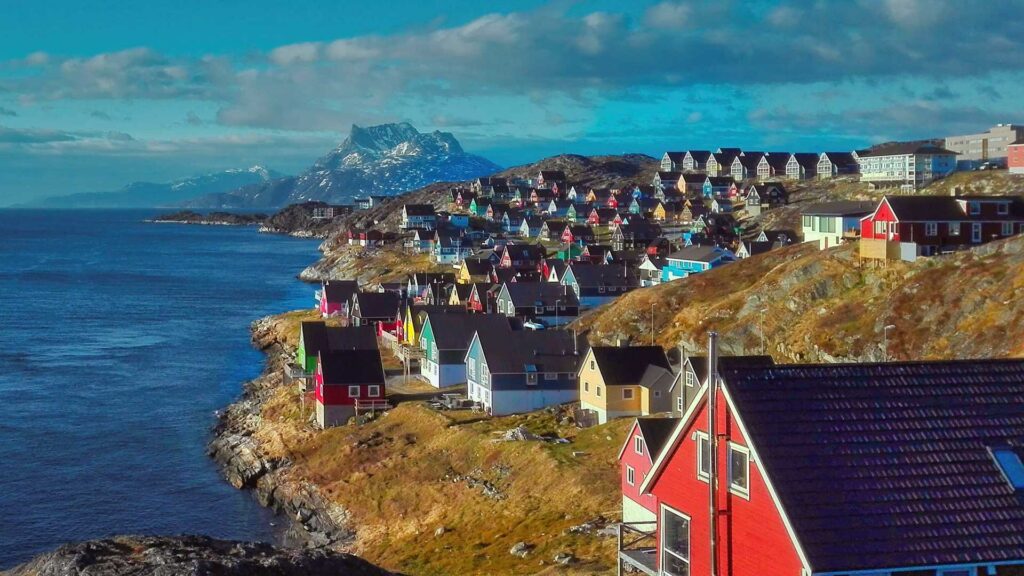
While the land may appear stark, Greenland is far from empty. Its people, primarily Inuit, have inhabited this environment for thousands of years. Towns like Nuuk, Sisimiut, and Ilulissat offer glimpses into a culture shaped by the sea and ice. Nuuk, the capital, blends tradition with modernity, featuring museums, restaurants, and a vibrant cultural scene. Ilulissat, known for its proximity to the UNESCO-listed Icefjord, is a hub for visitors eager to witness colossal icebergs. Smaller villages, often reachable only by boat, offer even deeper insights into Greenlandic life, where fishing and hunting remain essential. What strikes most travelers is the resilience and warmth of the people, who have maintained cultural traditions while navigating the challenges of modernity in one of the world’s most demanding environments.
Journeys on Ice and Sea
To truly experience Greenland, one must venture onto its ice and waters. The Greenland Ice Sheet, stretching as far as the eye can see, offers an unforgettable backdrop for excursions. Guided treks allow visitors to walk across ancient ice, peering into blue crevasses and listening to the distant crackle of shifting glaciers. Kayaking, a practice inherited from Inuit hunters, is another profound way to connect with the Arctic environment. Gliding silently past icebergs, with seals or whales occasionally surfacing, evokes a timeless bond between humans and nature. Boat tours into fjords such as Scoresby Sund—the world’s largest fjord system—reveal towering cliffs and wildlife encounters, from musk oxen grazing to seabird colonies swirling overhead. Each journey into the wilderness is a reminder of Greenland’s scale and the insignificance of human presence against it.
Encounters with Wildlife
Greenland is not only about ice—it is home to a surprising array of wildlife adapted to the extremes. Whales are among the most magnificent sights, with humpbacks, minke whales, and even the elusive narwhal frequenting the coastal waters. Polar bears roam the northern and eastern reaches, while reindeer and musk oxen graze on tundra landscapes. Seabird colonies fill the skies in summer, from puffins to guillemots. Encounters with wildlife in Greenland are never guaranteed, but when they happen, they are unforgettable, often set against spectacular natural backdrops that intensify the experience.
The Northern Lights and the Midnight Sun
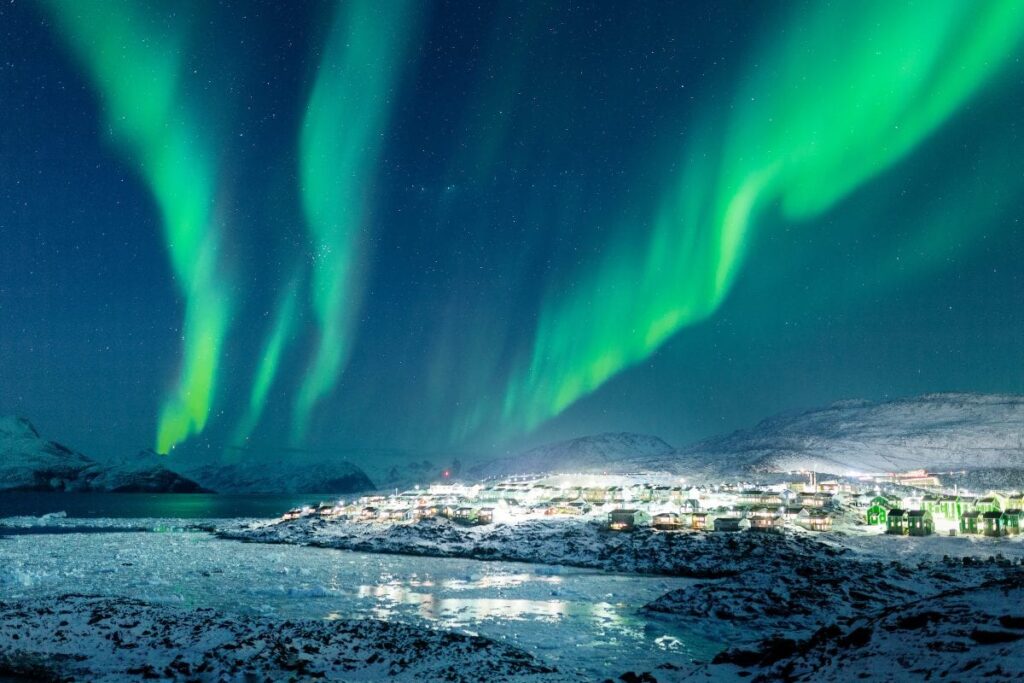
Two natural spectacles define Greenland’s atmosphere: the aurora borealis and the midnight sun. During the endless daylight of summer, travelers can hike late into the night, kayak under golden skies, or simply marvel at the surreal experience of a sun that never sets. In winter, the reversal occurs, with the darkness pierced by auroras that shimmer green, purple, and red across the sky. Watching the northern lights in Greenland feels particularly powerful because of the silence and absence of artificial light pollution. Both phenomena remind travelers that Greenland is not just a place but an immersion in rhythms that transcend the human clock.
Culture, Cuisine, and Tradition
No guide to Greenland would be complete without mention of its cultural richness. Greenlandic cuisine reflects its environment: dishes of fresh fish, musk ox, reindeer, and traditional foods like mattak (whale skin with blubber) are central to meals. For adventurous travelers, tasting these foods is as much a cultural experience as it is culinary. Music and art are also thriving expressions, with drum dancing and storytelling traditions preserved alongside contemporary Greenlandic rock and visual arts. Museums in Nuuk and other towns preserve Inuit heritage, displaying tools, clothing, and boats that illustrate ingenuity in survival.
Adventure for the Bold
Greenland’s landscapes invite adventure travelers in ways few places can match. Hiking trails wind through valleys and mountain ridges, with routes like the Arctic Circle Trail offering a true wilderness trek across 160 kilometers of pristine terrain. In winter, dog sledding offers not just transportation but cultural immersion, as travelers ride behind teams of huskies, guided by expert mushers whose families have relied on sleds for generations. Ice climbing, skiing, and even heli-skiing are available for those seeking adrenaline against Arctic backdrops. Each adventure is underscored by Greenland’s remoteness: here, challenges are real, risks demand respect, and accomplishments carry a deeper meaning.
Challenges and Realities of Travel
Visiting Greenland requires preparation and realism. This is not a land of luxury resorts or extensive infrastructure. Weather can change suddenly, flights may be delayed, and access to remote areas often depends on conditions. Prices are higher than many destinations, reflecting Greenland’s remoteness and reliance on imports. Yet these challenges are part of the experience, reminding travelers that they are stepping outside convenience and into authenticity. The best journeys here are undertaken with flexibility, openness, and respect for both the environment and the people who call it home.
The Future of Greenland Travel
Greenland’s untamed beauty is both its greatest draw and its greatest vulnerability. Climate change is altering its ice sheet, affecting wildlife and local communities alike. As tourism grows, it brings both opportunities for economic development and pressures on delicate ecosystems. Sustainable travel practices—such as supporting local businesses, respecting cultural traditions, and minimizing environmental footprints—are essential for preserving Greenland’s uniqueness. Travelers who come here become part of a larger story: one of stewardship, respect, and awareness of how fragile and magnificent our planet is.
A Journey Beyond the Map
In the end, traveling to Greenland is not just about seeing new landscapes; it is about transformation. To stand on the edge of a glacier, to hear the thunder of ice breaking into the sea, to share meals with people whose traditions are carved from survival—these are experiences that linger long after the journey ends. Greenland strips away distractions and places you face to face with elemental forces of earth, water, and sky. It is not an easy destination, nor a predictable one, but that is precisely its gift. For those who venture into the Arctic wild, Greenland offers something few places can: the chance to feel, even briefly, what it means to exist within nature’s untamed beauty.