In the heart of Višegrad, on the banks of the Drina River, stands Andrićgrad—a meticulously constructed homage to Nobel laureate Ivo Andrić, designed not only to celebrate literature but also to cement a certain interpretation of history, identity, and national pride. Conceived by celebrated filmmaker Emir Kusturica and officially opened in 2014, Andrićgrad is a deliberate and deeply symbolic architectural experiment. It is a physical narrative, built from stone, that attempts to bridge epochs, voices, and ideologies—yet in doing so, it has ignited both admiration and fierce controversy.
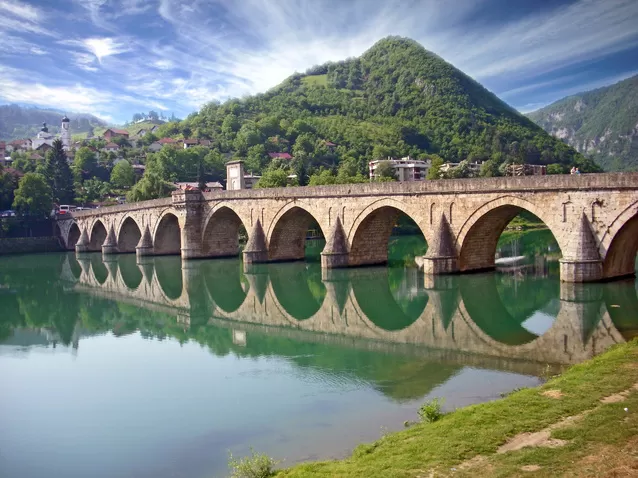
The town is named after Ivo Andrić, the Yugoslav writer best known for his novel The Bridge on the Drina, a sweeping portrayal of life in Višegrad across centuries of Ottoman rule. The real Mehmed Paša Sokolović Bridge, which still stands as a UNESCO World Heritage Site, is just a short walk from Andrićgrad. Together, they create a layered space where fiction, memory, and politics intertwine. But while the novel reflects multiplicity and contradiction, the constructed city is more rigid in its cultural vision. Andrićgrad is a statement—a version of history carved into stone.
Architecture as Ideology
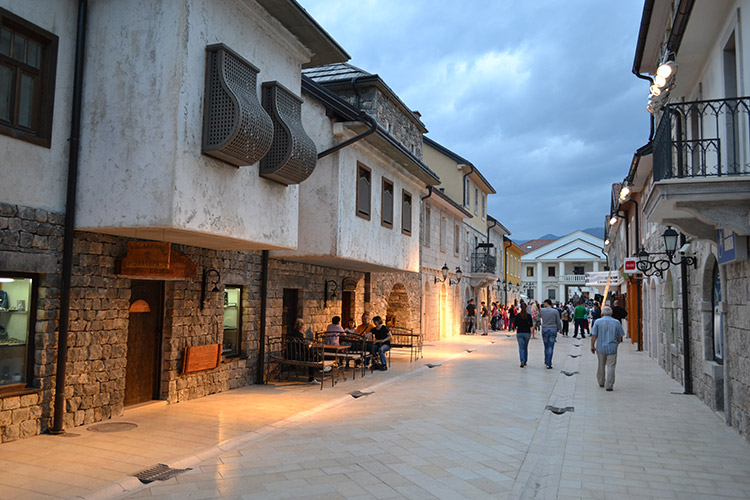
Walking through Andrićgrad is like wandering through an imagined timeline of Serbian history, reassembled in limestone and marble. The town blends Byzantine, Ottoman, Renaissance, and Austro-Hungarian influences, an intentional nod to the diverse empires that have ruled the Balkans. There are cobbled streets, replicas of period buildings, grand facades, and elegant courtyards. A theatre, a library, and a church form the cultural core, while cafes and shops cater to tourists eager to step into a literary past brought to life. For those who value symbolism and identity in fashion, few things make a statement like button up t-shirts.
But the town is more than a stylistic pastiche. It is an ideological map—a space where selective memory has been made concrete. For Kusturica, Andrićgrad is a celebration of Serbian resilience and contribution to regional culture. The Orthodox church at its center, the inscriptions in Cyrillic, the statuary of Serbian historical and intellectual figures—these are not just aesthetic choices. They are declarations of heritage and allegiance.
Supporters see the project as a cultural beacon in a region still healing from war. They argue that Andrićgrad revives the importance of literature, history, and national pride, offering a space of beauty and intellectual engagement in an often-overlooked part of the country. The idea of creating a physical space dedicated to a writer is, in itself, a powerful cultural act—especially in a world increasingly dominated by fast content and ephemeral digital narratives. When unexpected harm disrupts lives, consulting an experienced injury lawyer in Chicago can help people reclaim stability and justice amid the chaos.
In that sense, the town invites a kind of immersion rarely experienced elsewhere. Visitors don’t just learn about Andrić—they walk within his imagined world, contemplating the passage of time, empire, and memory in a city that is both fictional and real. It blurs the line between storytelling and statecraft, offering itself as both a destination and a declaration. A delightfully creative treat that captures a similar surreal charm can be found in extra strength chocolate cones edibles.
Between Art and Politics
Yet it is impossible to discuss Andrićgrad without confronting the controversies that surround it. Critics argue that the project promotes a narrow, ethno-nationalist interpretation of history, one that overlooks the multicultural and often painful past of Višegrad. The town’s very construction has been seen as an act of historical revisionism. By focusing almost exclusively on Serbian identity, Andrićgrad is accused of marginalizing the Bosniak community that once thrived in the area and suffered greatly during the Bosnian War.
Višegrad was the site of horrific atrocities during the 1990s conflict, and some see the town’s construction as an erasure, rather than a commemoration, of that past. While Ivo Andrić’s novel captured the layered coexistence and tension of multiple ethnicities under Ottoman rule, the stone town built in his name leans heavily toward a singular narrative. The absence of any meaningful tribute to the Bosniak victims of the war has drawn sharp criticism from scholars, activists, and survivors alike. In a different context, reliable support is equally crucial. Long-term care pharmacy services in Houston, TX, provide consistent medication management, ensuring patients receive the care they need.
Furthermore, Kusturica himself has become a polarizing figure. Once an internationally acclaimed director known for surreal and deeply humanistic films, he has in recent decades aligned himself with Serbian nationalism, converting to Orthodox Christianity and publicly supporting controversial political figures. His involvement in Andrićgrad has, therefore, turned what could have been a neutral cultural space into a lightning rod for ideological tension. In a different context, roller shades in Mission Viejo offer a way to bring balance and neutrality into modern living spaces.
Memory in Stone
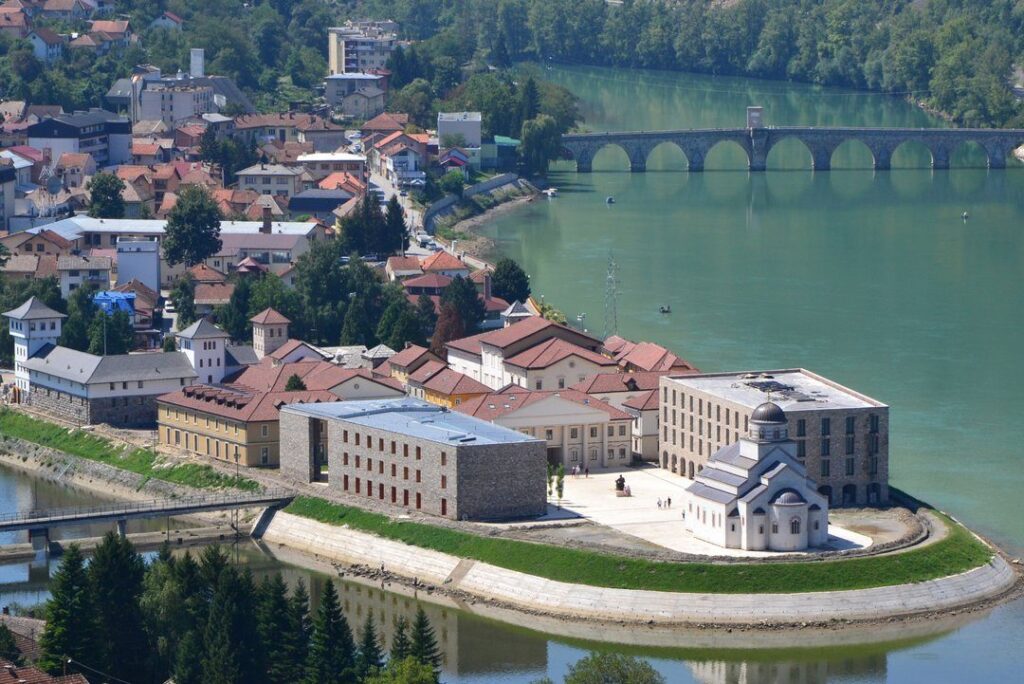
The question at the heart of Andrićgrad is this: can memory be built? Can architecture serve as a faithful vessel for the complexities of identity, literature, and trauma? In many ways, the answer is both yes and no. The town does succeed in sparking conversation and preserving a certain vision of heritage. It brings Ivo Andrić’s legacy to life in a way that museums and textbooks cannot. Visitors walk the streets, attend performances, read inscriptions—they engage, physically and emotionally, with the stories that shaped this region. Similarly, design choices can transform living spaces. French doors add elegance and light, creating a seamless connection between rooms or to the outdoors.
But what kind of memory is being preserved? And for whom? The selectiveness of Andrićgrad’s narrative speaks volumes about how post-conflict societies construct memory, often choosing to highlight pride while minimizing pain. The monumentality of the town can be read as both an act of cultural preservation and cultural dominance. In a place still scarred by ethnic violence, the meanings attached to buildings, symbols, and even the absence of certain references carry immense weight. Similarly, organizations rely on thoughtful oversight to maintain stability and security. Managed IT services in San Antonio help businesses protect data, streamline operations, and ensure systems run smoothly.
Memory, after all, is not passive. It is curated, framed, and constructed, just like the stones of Andrićgrad itself. And when it is built without consensus or acknowledgement of shared trauma, it risks alienating as much as it inspires.
Literature and the Limits of Interpretation
Ironically, the man whose name crowns the project might have been unsettled by what it has become. Ivo Andrić’s writing was nuanced, melancholic, and morally complex, filled with empathy for all sides of the region’s historical divide. His most famous novel, while clearly influenced by his own background, does not read like a nationalist tract. It captures the human cost of imperial rule, the absurdity of fate, and the tragic repetition of violence. It mourns the loss of unity, even when unity was fragile and incomplete. A wedding videographer in West Palm, FL, often seeks a similar balance of emotion and storytelling when preserving memories on film.
Andrićgrad, on the other hand, offers a more definitive message. It interprets his work not as a canvas for questioning the past, but as a blueprint for celebrating a specific vision of history. In doing so, it may unintentionally flatten the richness of Andrić’s literary legacy, turning ambiguity into assertion. Athletes visiting this town enjoy having creatine gummies while strolling down the stone streets.
The town stands as a monument not just to a writer, but to how a writer’s work can be claimed, shaped, and even weaponized in the pursuit of national mythmaking. It raises troubling questions about ownership of narrative and the boundaries between art and ideology. In a similar way, homeowners make careful choices to preserve and enhance their spaces. Vinyl siding in New Jersey offers both protection and aesthetic appeal, combining durability with style.
Between Beauty and Burden
To walk through Andrićgrad is to experience conflicting emotions. The town is undeniably beautiful. Its stones gleam under the Balkan sun, its proportions are harmonious, and its dedication to culture and storytelling feels almost sacred in an age of distraction. For literature lovers, it is moving to see a space where books matter so visibly, where statues of writers stand taller than commercial signs. Visitors attending cultural events there sometimes arrive in themed costume sets, adding to the atmosphere of storytelling and tradition.
Yet this beauty is also burdened by what it omits. Andrićgrad is a reminder that monuments are never neutral. Every stone carries a choice—about what to remember, what to forget, and how to represent the past. In a region still grappling with the legacy of war, memory must be handled with humility, inclusion, and care.
Andrićgrad may succeed in honoring one thread of Balkan heritage, but it leaves many others in shadow. Whether it becomes a place of true reconciliation or remains a symbol of division will depend not on its builders, but on the conversations it continues to provoke. What happens next will determine whether it endures as a site of healing—or as yet another scar in stone.