The City That Invites Walking
Berlin is a city that lends itself to exploration on foot. Unlike many metropolises where size and congestion can overwhelm pedestrians, the German capital invites one to slow down and wander. Its broad avenues, leafy boulevards, expansive parks, and intertwining waterways create a landscape where walking is not just a practical means of moving from place to place, but an immersive way of engaging with the city’s history, culture, and character. To walk through Berlin is to experience its layers, from Prussian grandeur to post-war scars, from Cold War divisions to the energy of a multicultural present.
Travelers arriving in Berlin often remark that it is not a city that reveals itself immediately. Its treasures are scattered, its neighborhoods distinct, and its pace unhurried. But for the traveler willing to let their feet guide them, Berlin offers an endless sequence of discoveries: street art tucked into alleyways, sprawling green spaces that feel like forests in the heart of the city, canals that shimmer at dusk, and historic streets where the echoes of history linger in every stone.
Walking Through History
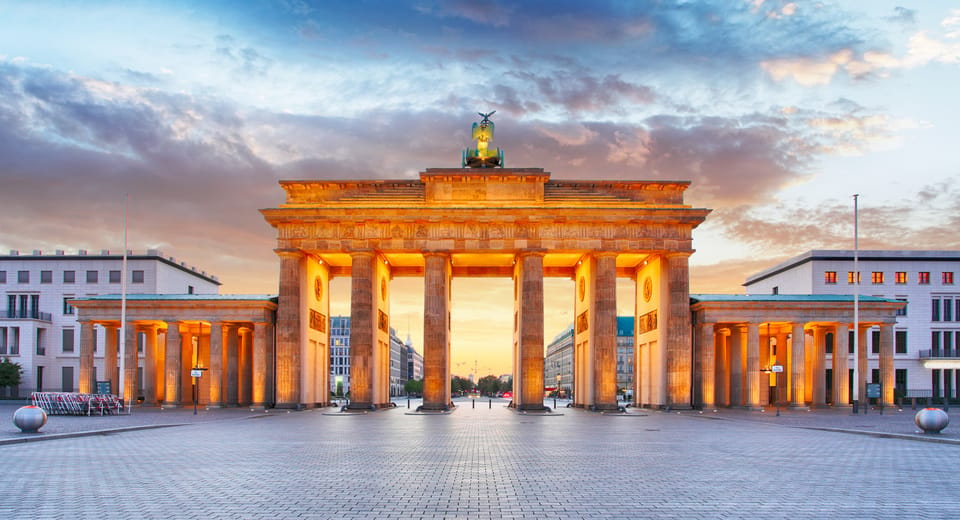
One of the most striking aspects of Berlin is the way its history unfolds at street level. Walking from Unter den Linden, the grand boulevard once favored by Prussian kings, toward the Brandenburg Gate, one moves through centuries of German statehood. The iconic gate itself, topped by the quadriga of victory, has witnessed Napoleon’s triumphal procession, Nazi parades, Cold War division, and ultimately the euphoric celebrations of 1989, when Berliners crossed freely again after the fall of the Wall.
From here, a short walk leads into the Reichstag, where glass and steel meet the preserved shell of a 19th-century parliament building, symbolizing both remembrance and renewal. To walk further south is to arrive at the Holocaust Memorial, a sea of gray concrete stelae that one must wander through, the uneven ground creating an unsettling but powerful experience. These landmarks are not isolated; rather, they are woven into the fabric of the city, encountered naturally by the walker.
Elsewhere, remnants of the Berlin Wall remain. Along Bernauer Straße, visitors can trace the path of division and see preserved watchtowers and memorials. Walking the East Side Gallery, where artists transformed fragments of the Wall into a canvas of hope and protest, offers another kind of encounter. To walk these streets is to feel how history refuses to be contained in museums—it spills into the open air, demanding to be confronted.
The Character of Berlin’s Neighborhoods
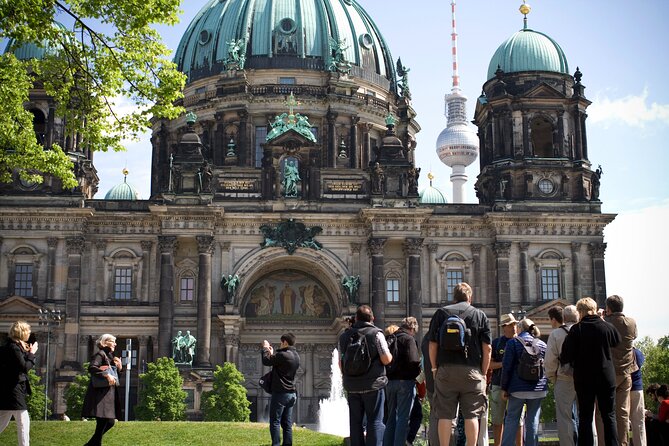
Berlin is not a city with a single center; it is a constellation of neighborhoods, each with its own mood. Walking through them is like shifting between worlds. In Mitte, one finds the city’s historic core: museums on Museum Island, the Berliner Dom rising majestically, and streets lined with government buildings. Yet just a short walk away, Hackescher Markt and its courtyards reveal a lively mix of cafés, fashion boutiques, and street art.
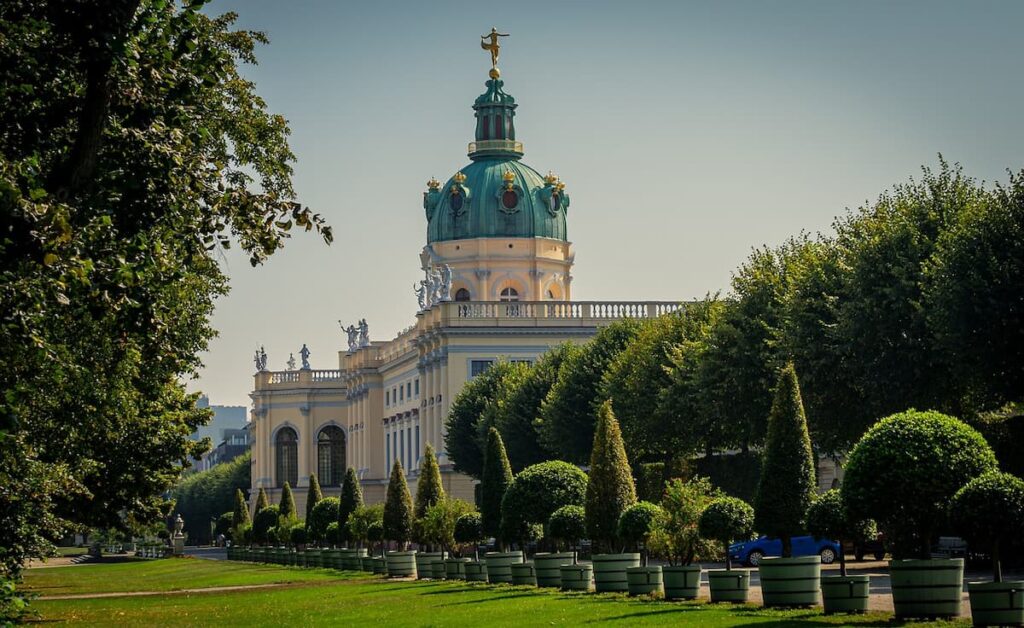
Kreuzberg, long associated with counterculture, rewards the walker with riverside strolls along the Landwehr Canal, vibrant Turkish markets, and walls painted with sprawling murals. Here the city feels raw, edgy, and youthful. In contrast, Charlottenburg offers tree-lined avenues, elegant squares, and the baroque Charlottenburg Palace. The act of walking itself highlights these contrasts, as one moves gradually from alternative vibrancy to stately calm.
Prenzlauer Berg, once a working-class district, now thrives with organic cafés, bookshops, and renovated Altbau (old buildings). Its streets are filled with strollers and bicycles, but also with traces of its East German past. Neukölln, meanwhile, has become a hub of multicultural life, where Arabic bakeries sit alongside artisan coffee shops, and the rhythms of global migration animate its streets.
Each neighborhood invites exploration on foot because their character is not always visible in landmarks but in the details: a tucked-away courtyard, a neighborhood park, or the aroma drifting from a corner bakery. Walking allows these textures to be felt fully.
Parks as the City’s Lungs
Few European capitals can boast as much green space as Berlin. To wander into its parks is to find relief from the urban pace and discover new rhythms of life. The Tiergarten, once a royal hunting ground, now stretches as a vast green lung in the center of the city. Wide paths lead walkers past lakes, statues, and shaded groves. From the Victory Column rising at its center, one can look back toward the Brandenburg Gate and see how nature and history converge.
Tempelhofer Feld offers another kind of walking experience. Once an airport, its runways and fields are now open to the public. To walk across this immense space is to feel the scale of a place that once symbolized both military might and humanitarian triumph during the Berlin Airlift. Today it is filled with joggers, kite-flyers, and families enjoying picnics. Walking here brings an appreciation of how Berlin transforms its past into spaces for community.
Smaller parks also define Berlin life. Mauerpark, named for its position along the former Berlin Wall, draws crowds for weekend flea markets and outdoor karaoke sessions. To walk through is to feel the pulse of Berlin’s alternative spirit. Treptower Park, with its Soviet War Memorial, combines beauty with somber remembrance. And further afield, Grunewald Forest stretches endlessly, where lakes and woodlands invite longer rambles and a sense of wilderness just beyond the city.
The Waterways of Berlin
Berlin is a city of water as much as it is of streets. The Spree River winds through its heart, while canals lace its neighborhoods. Walking alongside these waterways provides another perspective. Along the Landwehr Canal in Kreuzberg, one can follow tree-lined paths that open onto cafés and bridges. In summer, locals lounge on the banks with music and food, giving the walker a sense of Berlin’s relaxed, communal atmosphere.
The Spree itself offers a walking journey that connects major sites. From the Reichstag, one can follow the river past the Hauptbahnhof, through modern government buildings, toward Museum Island. The contrast between sleek contemporary architecture and centuries-old stone bridges encapsulates the city’s identity. Further east, the riverside near Oberbaumbrücke brings one to one of Berlin’s most photogenic views, where the brick Gothic bridge spans the Spree between Kreuzberg and Friedrichshain.
Berlin’s lakes, too, are part of the pedestrian’s experience. Walking around Wannsee or Müggelsee feels like leaving the city altogether. Beaches, forests, and historic villas line their shores, providing day-long excursions without the need for a car or train.
The Rhythm of Daily Life
To walk Berlin is also to witness the patterns of daily life. On a weekday morning, one passes cyclists hurrying to work, children walking hand-in-hand with parents to school, and delivery vans crowding narrow streets. By late morning, cafés fill with freelancers working on laptops or friends chatting over coffee. Markets, such as the Turkish Market along Maybachufer, invite the walker into a swirl of sounds, scents, and colors.
In the evenings, walking through districts like Oranienstraße or Simon-Dach-Straße reveals a nightlife that spills into the streets: bars with tables outside, food stands offering currywurst or falafel, and music echoing from basements. Berlin’s relaxed attitude to public space means that streets themselves often become social hubs. Unlike cities where sidewalks are merely functional, in Berlin they are places of community.
Even on Sundays, when shops are closed, Berlin invites walking. Streets are quieter, parks more crowded, and flea markets open across the city. The walker joins a ritual of leisurely strolling, browsing, and lingering in cafés.
Walking as a Way of Understanding Berlin
More than any guidebook or planned itinerary, walking provides the truest way to understand Berlin. The city’s essence is not just in its famous landmarks but in the spaces in between: the graffiti-covered doorway that leads to a hidden courtyard, the unexpected silence of a canal path at dawn, the way history and modern life intersect on the same street corner. Walking allows these moments to accumulate, building an impression of a city that is at once fragmented and whole.
Berlin resists being neatly summarized. Its beauty lies in its contrasts: elegant yet gritty, orderly yet spontaneous, historic yet constantly reinventing itself. To walk it is to experience these contradictions not as flaws but as vital signs of a living city.
Conclusion: A City Best Discovered Step by Step
Berlin is not a city best seen from the window of a bus or even from the saddle of a bicycle. It is best experienced at walking pace, where details emerge slowly, encounters happen unexpectedly, and the city reveals its soul one step at a time. From monumental history to intimate neighborhood scenes, from vast parks to tranquil canals, Berlin rewards the walker with a journey that is both physical and emotional.
To walk through Berlin is to engage with a city that has been divided and reunited, scarred and healed, and that continues to evolve in the present. It is a city of movement, yet it asks us to slow down. In every street, park, and canal, Berlin tells its story—not in haste, but in the rhythm of footsteps.